
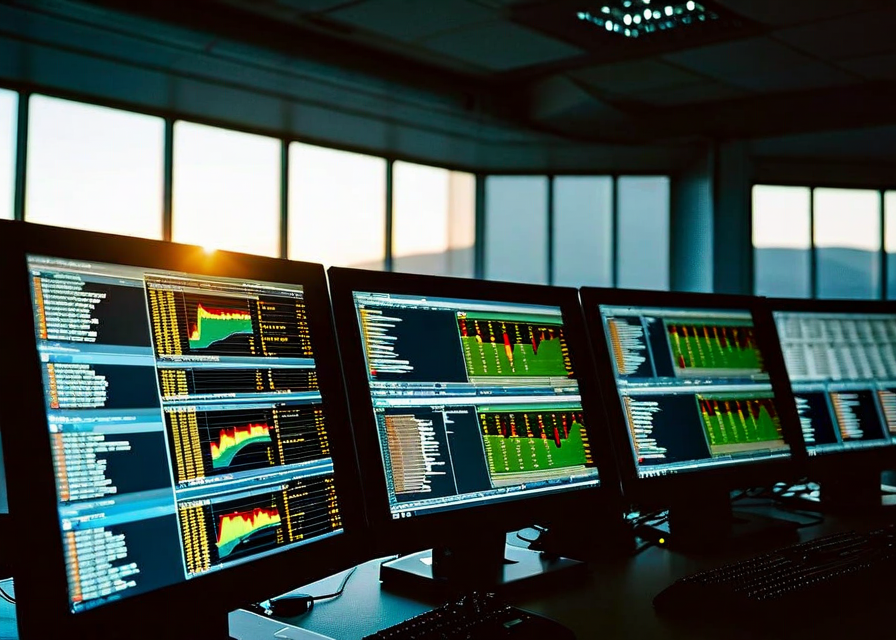
Relynk pipes OSIsoft PI, AVEVA Wonderware, GE Proficy, and Ignition historian streams through a 90-day statistical baseline. Bearing wear, pressure drift, and temperature excursions surface 4–72 hours before fault threshold — not after the line goes down.
PLC data in Modbus TCP. Process history in OSIsoft PI. Vibration readings in a standalone logger. Work orders in SAP PM. Shift notes in a spreadsheet. By the time an operator correlates a fault across all of that, the motor has already seized. Relynk aggregates those streams into a single anomaly-detection layer that watches for drift — continuously, against a 90-day baseline.
Native connectors for OSIsoft PI (via PI Web API), AVEVA Wonderware Historian, GE Proficy, and Ignition pull tag history and live feeds. Direct PLC connectivity via Modbus TCP, OPC UA, EtherNet/IP, and Profinet for plants without a central historian. No custom middleware required.
Relynk builds a rolling 90-day statistical baseline per sensor tag — vibration, temperature, pressure, and flow. When a reading drifts outside its tolerance band, an alert fires with the sensor ID, deviation magnitude, and trend context. Target lead time: 4–72 hours before the fault threshold is crossed.
Relynk reads from Ignition, AVEVA System Platform, GE Proficy, and WinCC via read-only API. No write-back, no new control path, no hardware on the plant floor. Your OT security team reviews one outbound read connection — that's the full exposure surface.
Explore IntegrationsWhen an anomaly clears the threshold, Relynk pushes a structured work order to SAP PM, IBM Maximo, or Fiix — with the sensor reading, deviation history, asset location, and suggested priority pre-filled. Technicians arrive at the asset with context, not a blank work order.
See How It Workstarget warning lead time before fault threshold is crossed
rolling baseline window per sensor tag for deviation scoring
SAP PM, Maximo, and Fiix — work orders pushed on alert
ARM/x86 edge deployment — no sensor data leaves the facility
Relynk’s operations dashboard pulls live and historical data from OSIsoft PI, AVEVA Wonderware, GE Proficy, and Ignition into a single asset hierarchy. Shift supervisors see vibration trends, temperature excursions, and open work orders side by side — without opening the SCADA HMI.

Paper mills, chemical processing plants, food & beverage continuous lines, and water treatment facilities — operations teams running SCADA who are done finding out about failures in the shift report.
“We had OSIsoft PI historian data going back four years. Relynk imported it, built baselines, and had the first anomaly alert the next morning. One bearing that had been trending wrong for six weeks.”
“Our OT security team wanted a read-only connection with no inbound network path from the cloud. Relynk’s edge gateway runs in our OT DMZ and only pushes outbound. Approval took two weeks.”
“Vibration on pump 7 had been trending up for 11 days. Relynk flagged it. We scheduled the bearing swap during the planned Saturday window instead of losing a Monday morning shift.”
“The SAP PM integration is the part our maintenance team actually uses every day. Work orders arrive with the sensor trend and the asset location already filled in. No one is starting from scratch.”
“We connected our AVEVA Wonderware Historian on a Tuesday afternoon. Relynk had baselines on 340 tags by Thursday morning. No consultant, no integration project.”
Point Relynk at your OSIsoft PI, AVEVA Wonderware, GE Proficy, or Ignition instance. Baselines build from historical data. First anomaly alerts typically appear within 24 hours of connection. No hardware swap, no OT network changes, no long rollout.